
Audit Committee
Basis of Audit Committee’s Establishment
The Audit Committee is a committee established by the Board of Commissioners (BoC) to support the performance of BoC’s duties and functions in accordance with Financial Services Authority Regulation No. 55/POJK.04/2015 on the Formation and Implementation Guidelines for Audit Committee (POJK 55/2015).
Audit Committee Charter
The Audit Committee carries out its duties and responsibilities in accordance with the applicable Audit Committee Charter. The Company's Audit Committee Charter was last updated in 2021. The Audit Committee Charter is available here.
Audit Committee’s Duties and Responsibilities
The Audit Committee is committed to complying with the Audit Committee Charter in carrying out their duties and functions in such a manner that consistently supports the BoC in accordance with the principles of Good Corporate Governance (GCG) and the applicable rules and regulations.
As stipulated in the renewed Audit Committee Charter, the Audit Committee’s duties and responsibilities include:
- Review of financial information.
- Dismissal and recommendation for the appointment of independent auditor and monitoring of their performance.
- Review of Internal Audit Division’s audit results.
- Internal control effectiveness.
- Monitoring of compliance with rules and regulations.
- Evaluation on the implementation of risk management.
Independency Statement
To maintain the independency, every member of the Audit Committee must fulfill the independency requirements as stipulated in the Audit Committee Charter, as follows:
- Not an insider party to the Public Accounting Firm, Legal Consulting Firm, Public Appraiser Firm, or other parties which provide assurance services, appraisal services and/or other consultation services to the company within the last 6 (six) months.
- Not a party working for or having the authority and responsibility to plan, lead, control, or supervise the company’s activities within the last 6 (six) months, except for the Independent Commissioners.
- Not holding the company’s shares directly or indirectly. In the event that a member of Audit Committee receives the company’s shares directly or indirectly due to a legal event, the shares must be transferred to other parties at the latest within 6 (six) months after the shares are received.
- Not having an affiliated relationship with any member of BoC, Board of Directors (BoD), or major shareholders of the company.
- Not having any business relationship which is directly or indirectly related to the company’s business activities.
- In the event that an Independent Commissioner is a member of the Audit Committee, such Independent Commissioner may only be reappointed to be a member of the Audit Committee for 1 (one) subsequent term of office.
- An Independent Commissioner who holds the position as the Audit Committee Chairperson may only hold a position as a chairperson at 1 (one) other committee.
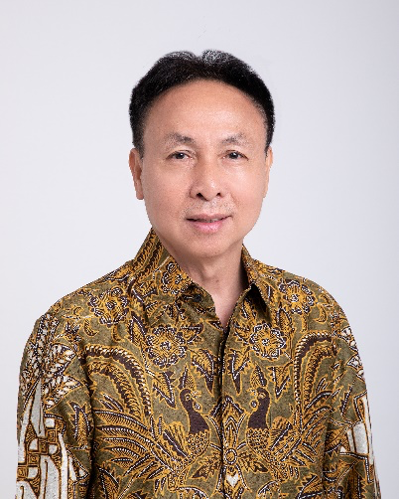
The Profiles of the Audit Committee’s Chairman and Members

Domicile |
Jakarta |
Education History |
|
Work Experience |
|

Domicile |
Jakarta |
Education History |
|
Work Experience |
|
Domicile |
Jakarta |
Education History |
|
Work Experience |
|
Remuneration and Nomination Function
The BoC has decided that the function of nomination and remuneration for the BoC and BoD shall be carried out by the BoC without establishing a committee of nomination and remuneration.
In the implementation, the BoC shall act independently by referring to the Guideline for the Nomination and Remuneration Function, which determines the associated duties and responsibilities of the BoC.
The roles carried out concerning nomination:
- Determine the policy on the BoC’s and BoD’s compositions, criteria for the nomination process, and performance evaluation of the members of the BoC and BoD.
- Assess the BoC’s and BoD’s performance based on the policies.
- Determine the policies on the skill development program for BoC and BoD.
- Determine the candidates of the BoC and BoD members to be proposed to the General Meeting of Shareholders (GMS).
The roles carried out concerning remuneration:
- Determine the policies on the remuneration structure, policies, and amount.
- Assess the BoC’s and BoD’s performance by referring to the remuneration received.
The complete guideline for the Nomination and Remuneration Function is provided here.
BoD Supporting Organs
Sustainability Management Team
The Company has Sustainability Management Team with the role to support the implementation of the BoD’s duties concerning sustainability. This team reports directly to the BoD and is responsible for:
- Assist the BoD in determining strategic directions for establishing sustainability policies and management.
- Implementing sustainability management policy by coordinating with the associated corporate functions and evaluating the company’s sustainability performance.
- Taking direct approaches to determine the basic policies, monitoring the implementation, and reviewing the effectiveness of strategies and ensuring the alignment with the AlamTri Group’s business objectives. The team also determined the next steps of the sustainability journey.
In 2025, the Sustainability Management Team coordinated the process of preparing Sustainability Report, reviewed the content of Sustainability Report, reviewed the latest ESG trends, and studied the latest sustainability reporting framework, such as the International Financial Reporting Standards (IFRS) S1 General Requirements for Disclosure of Sustainability related Financial Information dan IFRS S2 Climate-related Disclosures.
WBS Team
WBS Team established by Alamtri's BoD at the holding company level, consists of representatives of AlamTri management. In managing the WBS, AlamTri collaborates with an independent party. Upon receiving the violation reports from the independent party, the WBS Team will forward the reports to AlamTri’s BoD to be followed up by the relevant parties, either AlamTri’s or subsidiaries’ management, or by the independent party according to the applicable procedure. The WBS Team also regularly reports to AlamTri’s BoD on the handling process and progress of the violation reports.
Corporate Secretary
As a public company, AlamTri is required to have a Corporate Secretary function in accordance with the provision of the Financial Services Authority Regulation No. 35/POJK.04/2014 on Corporate Secretary of Issuers or Public Companies. The Corporate Secretary has the duties and responsibilities to facilitate the communication among the company’s organs, plan and develop corporate governance policies, and ensure the Company's effective communications with external individuals and institutions, including investors and other market participants, while taking account of the company’s code of conduct, governance principles, and values.
This function is carried out by Corporate Secretary Department, which reports directly to the Director and maintains active communications with all BoD members and the personnel of other functions within the Company. The appointment of the Corporate Secretary is a component of the GCG implementation. The Corporate Secretary is not allowed to hold any position at any other issuer or public company.
MAHARANI CINDY OPSSEDHA, Corporate Secretary

|
Citizenship |
Indonesian |
|
Age |
46 as at December 31st 2025 |
|
Education |
|
|
Legal Basis of Appointment |
AlamTri BoD resolution, effective as of June 3, 2025. |
|
Works Experience |
|
In 2025, the Corporate Secretary fulfilled the duties and responsibilities by:
- Presented regular reports and information disclosures to the FSA and IDX in compliance with capital market rules and regulations.
- Supported the BoD in conducting AGMS for the fiscal year 2025 and fulfilling the annual public expose requirement.
- Oversaw the Company’s shareholders registration data and reported the changes to the BoD and regulators.
- Provided updates to the BoC and BoD on the Company’s shares and other capital market matters.
- Together with the Internal Audit Division, improved and promoted GCG implementation in the Company and identified governance risks.
- Maintained effective communications with stakeholders, particularly with capital market regulatory bodies.
- Ensured the Company’s website was fully updated and in compliance with capital market rules and regulations.
- Developed and proposed to the related directorate on work plans, budget and performance indicators of Corporate Secretary Department to the associated Director.
Investor Relations
The Investor Relations serves as the liaison between the company and the shareholders at both local and international levels, by sharing the company’s business and financial performance, as well as corporate achievements. The information is expected to help analysts in building stories about the company and the investors in making investment decisions. The company believes that ongoing dialogues with the shareholders based on fact and transparency will create maximum shareholder value.
To ensure the company’s messaging and performance are well communicated, Investor Relations release several reports, such as the quarterly press releases, financial statements, financial press releases, and disclosure reports. Investor relations also communicate through several events, such as investor presentations, the public exposes, and the regular meetings with analysts and investors.
Internal Audit
The Internal Audit Function has carried out its duties in accordance with the Internal Audit Charter. The Board of Directors has given its full support to the internal audit activities and there were no restrictions on the scope and access for the Internal Audit Function.
The Internal Audit Function plays the role to provide an objective and independent assurance and consultancy services for AlamTri and its subsidiaries in the areas of governance, risk management and control, to add value and improve the company’s operations.
In addition to complying with the Company’s Values and the AlamTri Group’s Code of Conduct, the Internal Audit Function also adopts the Code of Conduct for internal audit profession issued by IIA. Each Alamtri’s internal auditor must read and understand the Code of Conduct
The complete Internal Audit Charter can be accessed here.
|
Citizenship |
Indonesian |
|
Age |
40 as at December 31st, 2025 |
|
Education |
Bachelor of Financial Accounting, Unviersitas Surabaya, Indonesia |
|
Legal Basis of Appointment |
Decision of the Board of Commissioners of PT Alamtri Resources Indonesia Tbk , Effective as of April 23, 2025:
|
|
Work Experience |
|
The Internal Audit Function’s duties and responsibilities, among others, include the following:
- Developing a flexible annual risk-based internal audit plan.
- Implementing the annual internal audit plan and conducting special audits whenever necessary.
- Testing and evaluating the implementation of internal control and risk management systems in accordance with the company policies and applicable regulations.
- Examining and assessing the efficiency and effectiveness in all aspects, including finance, accounting, operations, human resources, marketing, information technology, and other activities.
- Providing suggestions for improvement and objective information about the relevant activities examined at all levels of management.
- Preparing an audit report and submit the report to the BoD, BoC, and the Audit Committee.
- Monitoring, analyzing, and reporting the implementation of the improvement actions recommended.
- Collaborating with the Audit Committee
- Developing and implementing the assurance and quality improvement program to evaluate the activities of the Internal Audit Function.
- Coordinating with other assurance functions (such as Legal and Compliance, Risk Management, external auditor) to optimize the assurance on the process of governance, risk management, and control of the Company.
Structure and Position
The Internal Audit Function is independent and reports directly to the President Director. To maintain objectivity, internal auditors are not allowed to have duties and positions concurrent with the implementer of the operational activities of the company and subsidiaries.
In addition, internal auditors must sign the Statement of Conflict of Interest every year to ensure that they have no potential of conflict of interest in carrying out duties and responsibilities, and if there is any conflict of interest, the company will take the necessary measures to overcome the associated risk of conflict of interest.
Internal Audit Practices
The internal audit practices are carried out by referring to the International Standards for the Professional Practice of Internal Auditing issued by the Institute of Internal Auditors (IIA). The standards of internal audit works have been formalized into a Standard Operating Procedure of Internal Audit.
Use of Information Technology
To facilitate its activity, the Internal Audit function has been using information technology as needed, such as for working papers, internal audit portal for knowledge management, timesheets, corrective actions data base, and data analytics tools software.
Assurance Program and Quality Improvement
To ensure continuous improvement of its audit quality, the Internal Audit Function implements a quality assurance and improvement program that comprises:
- conducting surveys to obtain feedback from the management;
- performing self-assessment and peer review for each audit assignment to ensure compliance with the existing Internal Audit manual; and
- conducting self-assessment on the compliance with FSA regulations and conformance with IIA Standards.
The result of quality assurance and improvement program is compiled and discussed every year to be included in our continuous improvement project for the following year. The quality assurance and improvement program has been performed regularly and produced positive results. The outcomes are reported to the Board of Directors and the Audit Committee on a regular basis.
Investor Relations
The Investor Relations is responsible for building communications between the company and the shareholders at both local and international levels, by sharing the company’s business and financial performance, as well as corporate achievements. The information is expected to help analysts in building stories about the company and the investors in making investment decisions. The company believes that ongoing dialogues with the shareholders based on fact and transparency will create maximum shareholder value.
To ensure that the company’s messages and performance are well-communicated, Investor Relations releases several reports, such as the quarterly press releases, financial statements, financial press releases, and disclosure reports. Investor relations also communicate through several events, such as investor presentations, the public exposes, and the regular meetings with analysts and investors.
Environmental, Social, and Governance
AlamTri is committed to continuously strengthening the Environmental, Social, and Governance (ESG) in each operational activity to maintain the practice of a good mining company and support the environmentally friendly principles. One of the steps made to support this is the establishment of a division dedicated to ESG.
The ESG Division has the duties of formulating ESG planning and implementation plans, developing ESG policies and evaluating the comprehensive implementation of ESG programs, and identifying improvement opportunities. The ESG Division is also positioned as the coordinator for the associated divisions in implementing and improving ESG performance.
*This division is led by Danuta Komar, who reports directly to the Director.*